Chapter OneWhat Devil’s Night Actually Was
Devil’s Night is the name Detroiters gave to October 30 — the night before Halloween. In most of the country the same evening is called Mischief Night, Cabbage Night, Goosey Night or Gate Night, and the traditional activities were what the names suggest: toilet paper in trees, eggs on windows, doorbells rung and abandoned, garden vegetables thrown at houses.
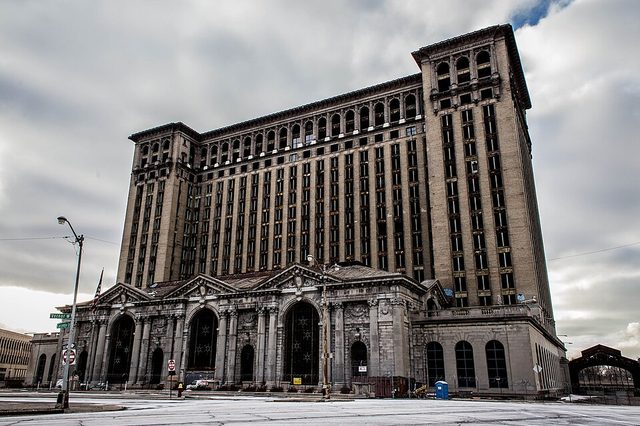
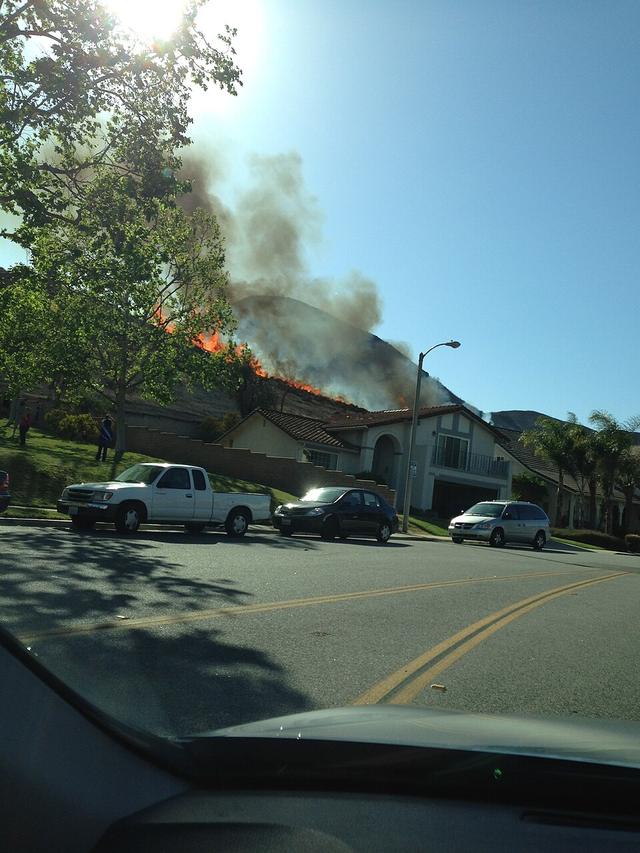
What made Detroit different was escalation. Beginning in the late 1960s and running through the 1990s, the pranks in Detroit turned into something far more serious: mass arson. Empty houses, apartment blocks, commercial buildings, cars and dumpsters were set alight across the city on a single night, year after year. The fires were so numerous, and the imagery so dramatic, that people reportedly traveled from other states and even other countries to watch Detroit burn.
This is the part that gets lost in retellings: Devil’s Night in Detroit was not a horror story or a legend. It was a recurring municipal emergency, with a body count, a fire department pushed past its limits, and a city that eventually solved it — not with policing alone, but with volunteers.
Chapter TwoThe Roots: Mischief Night Crosses the Atlantic
The ancestor of Devil’s Night is a British folk custom. The phrase “mischief night” appears in print as early as 1790, and the underlying tradition is older still — a Puritan writer was complaining about May Day Eve mischief in 1583. In England the pranks originally attached to May Day Eve, then migrated to the night before Guy Fawkes Night on November 4, and eventually to October 30.
Mischief Night arrived in the United States in the 1930s and 1940s, carried by immigrant communities and spreading through industrial cities. Newspapers of the period describe young people deliberately separating the “wholesome” night of trick-or-treating from a separate night of chaos. Some historians connect the timing to the Great Depression — Black Tuesday fell on October 29, 1929, and the economic desperation that followed may have sharpened the appetite for disorder.
In Detroit, the custom took hold firmly enough that by the 1970s the Detroit Free Press was publishing straight-faced service journalism about it, including a guide headlined “How to beat the Devil” with tips on goblin-proofing your home. One warning from that guide is a small masterpiece of local reporting: if someone throws lighted paper on your porch, do not rush to stomp it out — there may be animal droppings inside.
Chapter Three1940s to 1970s: Nuisance, Not Catastrophe
For roughly three decades, Devil’s Night in Detroit was a policing annoyance rather than a disaster. The mischief of the 1940s through the 1970s was mostly egging and toilet-papering — property damage, but petty property damage. Fire and police departments braced for it the way other cities brace for a rowdy Saturday.
The escalation shows up in the numbers. In 1978, the Free Press reported vandals smashing 99 windows across 72 city buses, damaging 84 homes, and eight instances of arson. Eight is a bad night, not a catastrophe. Within six years it would be more than a hundred times that.
What changed in between was the city itself. Detroit’s population peaked in 1950 and then fell for decades. As people left, houses were abandoned, and the city was slow to demolish them. By the early 1980s there was a large supply of empty wooden structures standing in dense residential blocks — buildings nobody would miss, and buildings that would take a neighboring house with them once they caught.
Chapter Four1984: The Year of 810 Fires
The peak came in 1984. Over the three-day period from October 29 to 31, the Detroit Fire Department recorded 810 fires — the highest total ever documented for the city. The number is worth sitting with: more than eight hundred separate fires in seventy-two hours, in one city.
The department could not keep up. Firefighters reported response times of up to seven hours to some blazes, because every available crew was already committed. Arsonists mostly targeted vacant properties, but fire does not respect a property line. The fires spread into occupied homes. Over the years the tradition produced injuries, destroyed property, and killed people.
The exact count is contested, and that is part of the history. In 1984 the fire department believed Mayor Coleman Young was understating the number of fires for political reasons, while Young blamed the Free Press for creating a self-fulfilling prophecy. “An expectation was built up in the minds of the public for negative events on Devil’s Night,” he said. “So Devil’s Night came, and the wish became father to the thought.” Board of Police Commissioners chairman Harold Shapiro made a similar argument about media coverage. Both things can be true: the coverage was sensational, and the city was genuinely burning.
Chapter FiveThe City Fights Back: Curfews and Patrols
Detroit’s first serious countermeasures came in the mid-1980s. In 1986 the city imposed a curfew restricting anyone under 18 from being out after 10 p.m. on October 30 (and the surrounding nights) unless accompanied by an adult. Coleman Young also increased police and fire patrols and pushed demolition of vacant buildings, under pressure from community groups who argued the empty houses were the root cause.
It helped, but it did not solve it. Arson surged again in 1994, catching the city off guard and embarrassing its leadership. The following year, newly elected Mayor Dennis Archer tried something different, and it is the turning point of the whole story.
Instead of relying on police alone, the city recruited thousands of volunteers to patrol their own neighborhoods on Devil’s Night — watching vacant houses, reporting suspicious activity, and simply being visibly present on the blocks where they lived. Archer toured the city on the eve of the night to encourage them. The program was branded “Angel’s Night,” and it reframed the evening from something the city suffered to something residents owned.
The results were immediate and durable. Fires fell, and kept falling. The mechanism was not mysterious: arsonists work in the dark and in isolation, and a block full of neighbors sitting on porches with flashlights is neither.
Chapter SixThe Long Decline — and the End
Angel’s Night ran for more than two decades, and the numbers tell the story of a tradition dying out. Juvenile detentions on Devil’s Night fell steadily through the 2010s: 126 in 2013, 24 in 2014, 15 in 2015, 8 in 2016, and just 6 in 2017.
By 2017 fires had reached a record low, and Mayor Mike Duggan ended the city-organized Angel’s Night mobilization — not because the problem had been abandoned, but because it had been solved. In 2018, fewer than a dozen fires broke out on October 30. Only five involved a house or building, and some of those may have been accidental. Fire Commissioner Eric Jones described it as an ordinary night for his department.
Compare that to 1984: more than eight hundred fires, seven-hour response times, and a city watching itself burn on the news. The gap between those two nights is one of the more remarkable turnaround stories in American urban history, and it was accomplished largely by residents rather than by policy.
Chapter SevenDevil’s Night Today
Devil’s Night as a mass event is over. What remains is the name — still what many Detroiters and Michiganders call October 30 out of habit — and a much smaller, more ordinary night of teenage mischief. The empty-house supply that fed the fires has largely been demolished or rehabbed, and the neighborhood networks that formed around Angel’s Night never fully dissolved.
Elsewhere in the country, the older tradition persists under other names. Mischief Night is still observed in parts of New Jersey, Philadelphia and New York, where the pranks are eggs and toilet paper rather than accelerants. In Northern England it is still tied to November 4 and Bonfire Night. In Quebec it was “Mat Night,” for stealing doormats; in parts of Ontario, “Cabbage Night,” for raiding gardens.
If there is a lesson in the Detroit version, it is not the usual one about vandalism. It is that a city-scale problem which resisted curfews, patrols and press campaigns was ultimately reduced by ordinary people standing on their own porches. That is a stranger and more hopeful ending than the fires ever suggested.
Devil’s Night: Quick Facts
Date: October 30 — the night before Halloween
Also called: Mischief Night, Cabbage Night, Goosey Night, Gate Night, Mat Night
Peak year: 1984 — 810 fires recorded October 29–31
Worst response time: up to 7 hours to reach some fires in 1984
Curfew imposed: 1986 — under 18, off the streets after 10 p.m. on October 30
Angel’s Night launched: 1995, under Mayor Dennis Archer, with thousands of volunteers
Program ended: 2017, by Mayor Mike Duggan, after fires hit a record low
2018: fewer than a dozen fires; only 5 involved a house or building
Figures from the Detroit Historical Society, Detroit Fire Department data reported by local press, and the CDC’s MMWR report on Detroit’s Halloween arson intervention.
Watch: Devil’s Night on Film
“Devil’s Night in Detroit” — Jordan Garland
“The History of Devil’s Night” — Halloween Central
Detroit Devil’s Night 1984 — fire radio traffic
Angel’s Night block party — New Era Detroit
Test Your Knowledge
Sources & Further Reading
- Detroit Historical Society — Haunted History: Devil’s Night
- Outlier Media — Devil’s Night in Detroit: A history
- Wikipedia — Mischief Night
- CDC MMWR — Urban Community Intervention to Prevent Halloween Arson, Detroit
- CBS News — Devil’s Night Fires Doused In Detroit
- Motor City Muckraker — Devil’s Night ended with a handful of fires
- New York Times — Detroit Reclaims Halloween, a Holiday Once Marred by Fire
- WDET — The history (and end) of Devil’s Night in Detroit